


Pores have no muscles. They don't open in heat or close in cold. Steam doesn't dilate them, ice water doesn't tighten them, and the 'pore-minimizing toner' on your shelf is doing nothing to your pore diameter, because diameter is genetic and fixed by your late teens. *You can change what's inside the pore and what's happening to the skin around it.* That's three levers: clearing the keratin/sebum plug that makes the pore look dark and shadowed; regulating sebum so it doesn't refill the pore as fast; and protecting the collagen scaffold around the pore so it doesn't sag and stretch with age. Each lever has an ingredient with strong cosmetic-chemistry evidence (BHA, niacinamide, retinoid), and sunscreen is the critical preventative. The six picks come from cross-referencing what cosmetic chemist Lab Muffin Beauty Science and dermatologist Dr. Sam Bunting say with what the Korean dermatology community prescribes, and keeping the products that earn their place in both consensus pools.
Paula's Choice Skin Perfecting 2% BHA Liquid Exfoliant
Salicylic acid 2 % · 118 ml · pH 3.2–3.5 · ~$37
Paula's Choice 2 % BHA is the reference Western pore product, and Lab Muffin Beauty Science says it 'remains the best formula I've tried.' Salicylic acid is oil-soluble, which means it gets *inside* the pore lining where the keratin/sebum plug forms. Few other actives reach that far.
- Oil-soluble, penetrates the sebaceous lining where comedones form
- Lab Muffin Beauty Science rates it the best BHA formula she has tried
- Fragrance-free; works under any other layer in the routine
- Asian regulators cap salicylic at 0.5–2 % leave-on; this Western SKU is at the ceiling, start with caution
- Can dry out dehydrated skin; pair with a hydrating layer
- Sun-sensitizing, daytime SPF non-negotiable on usage days
The case for Paula's Choice over a Korean BHA is potency. Korean OTC formulations either cap salicylic lower or swap in betaine salicylate or willow bark, gentler for daily use, but slower to clear stubborn congestion. Paula's at 2 % at the right pH (3.2–3.5, acid form) is what dermatology subreddits and cosmetic chemists default-recommend when someone wants visible decongestion in 4–8 weeks instead of 12. Apply at night after cleansing on dry skin; wait 20 minutes before next layer if you're stacking. Cycle 2–4× weekly to start; many users tolerate nightly within 6 weeks if barrier function is healthy. Never on the same night as retinol.
COSRX BHA Blackhead Power Liquid
4 % betaine salicylate (BHA) in willow bark water + niacinamide · 100 ml · ~$22
COSRX's liquid is K-beauty's answer to BHA, with a gentler bioavailability profile that makes daily use workable. Its 4 % betaine salicylate is a milder relative of salicylic acid, set in a willow bark water base. The practical effect is a BHA you can use every day without the pH-3.2 sting.
- Tolerable for daily use without barrier disruption
- Pairs cleanly with niacinamide and snail mucin in K-beauty layered routines
- Cult favorite for ten years, with consistent results reported by users
- Slower visible effect than Paula's 2 % (8–12 weeks vs 4–8)
- Not strong enough for stubborn cystic congestion, Paula's beats it for that case
- Bottle is 100 ml; runs out faster at daily-use cadence
The two BHAs complement each other. Many experienced users settle into a pattern: COSRX daily for general maintenance and gentle keratin-plug clearing; Paula's 2–3× weekly for targeted intervention when congestion flares. Or pick one based on tolerance: if your skin reacted poorly to a 2 % salicylic spot treatment in the past, COSRX is the right starting point. If you've been using a Paula's-tier BHA already and haven't had irritation, the COSRX is a downgrade in potency for the same routine slot. Apply on dry skin after cleansing; layer cleanly with snail mucin or niacinamide on top; works AM or PM.
The Ordinary Niacinamide 10 % + Zinc 1 %
Niacinamide 10 % + zinc PCA 1 % · 30 ml · ~$8
Niacinamide is a widely available ingredient with clinical evidence for *reducing sebum production* over time. BHA clears today's plug; niacinamide changes how much oil refills the pore tomorrow. The effect is cumulative and slow, but at $8 the monthly cost is hard to beat.
- Sebum reduction is measurable in clinical literature at 4–10 % topical
- Brightens post-acne marks (PIH) as a side benefit
- Won't conflict with BHA, retinol, or vitamin C
- Slow, don't expect change in the first 4 weeks
- The Ordinary's texture is silicone-based; some find it tacky under makeup
- Some people flush at 10 %; introduce it a few mornings a week first
Niacinamide's sebum effect has clinical backing: in a 2006 Draelos study, 2 % topical niacinamide lowered sebum excretion in Japanese subjects within 2–4 weeks and cut surface sebum in Caucasian subjects by week 6. The catch: it's slow and invisible week-to-week. The Ordinary's bottle is the cheapest credible delivery (~$8 for 30 ml). Beauty of Joseon Glow Serum (in our routines) delivers 2 % niacinamide alongside propolis, gentler if you're sensitive but slower. Apply daily AM after toner, before moisturizer.
COSRX Low pH Good Morning Gel Cleanser
pH 5.5 · 150 ml · low-foam gel · ~$12
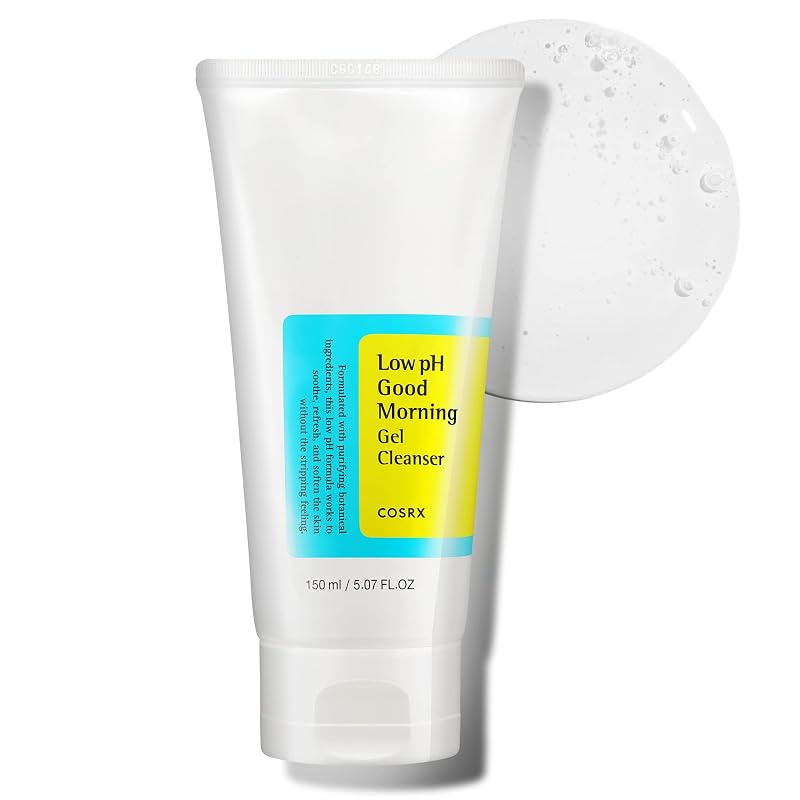
The cleanser is where most pore-care routines go wrong. A high-pH stripping cleanser triggers reactive sebum production that *worsens* visible pores within hours. A pH-balanced cleanser keeps the acid mantle intact and lets the actives do their work without compensatory oil rebound.
- Acid-mantle preserving, won't trigger reactive sebum
- Gentle enough to use AM + PM without barrier disruption
- Mild trace BHA + tea tree for incremental pore support without irritation
- Won't remove heavy makeup or thick SPF, needs an oil cleanser ahead of it on those days
- Not 'foamy', may feel insufficient if you're used to high-foam Western cleansers
- Stings on broken skin (avoid right after extraction or shaving)
Korean dermatology's preference for pH 5.5 cleansers rests on measured outcomes: cleansers above pH 7 (most Western drugstore foaming washes) reduce skin's natural acid mantle, which sits around pH 4.5–5.5. The skin overcompensates with sebum production, undoing days of niacinamide work. COSRX Low pH became the K-beauty entry-point cleanser because it's nearly impossible to misuse. AM cleanse + PM second cleanse (after an oil cleanse if wearing makeup or sunscreen). Don't substitute a 'gentle' Western cleanser without checking the pH on a strip, many drugstore 'gentle' cleansers test at pH 7–9.
COSRX The Retinol 0.3 Cream
Retinol 0.3 % · 20 g · ~$25

Retinol's pore effect is the slowest of any active here, and the most durable. Retinoids increase cell turnover, which prevents the keratin plugs from forming in the first place; over 6+ months they also stimulate collagen, which firms the skin around the pore opening. Retinol is the only active that addresses pore *appearance* at the structural level.
- Only active that addresses pore appearance structurally (not plug-clearing alone)
- Most-evidenced anti-aging molecule in cosmetic chemistry literature
- COSRX's encapsulated 0.3 % formula is a gentler start than 0.5 % retinols
- Retinization period (week 2–6) involves dryness, flaking, and redness; push through and don't quit
- Sun-sensitizing, strict SPF50+ during use is not optional
- Skip during pregnancy or while planning to conceive, see The Pregnancy-Safe routine
If you only do one thing for pores, do retinoid + sunscreen. The retinoid does long-term cellular work (cell turnover prevents new plugs, collagen support firms the pore frame), the sunscreen prevents daily collagen breakdown that would undo the retinoid's gains. COSRX 0.3 % is the right entry point; at higher concentrations (0.5 %, 1 %) the retinization phase is severe enough that most users quit. Start 2× weekly evenings; build to 3–4× over 6 weeks; nightly only if your skin stays asymptomatic at the lower frequency. Never on the same night as BHA.
Anua Zero-Cast Moisturizing Sunscreen SPF 50
Broad spectrum SPF 50 · 50 ml · fragrance-free · non-comedogenic · ~$18

Skip ahead 20 years. The pore that looks 'small' at 25 looks 'stretched' at 45 because the collagen scaffold around it degraded under cumulative UV exposure; the pore itself stayed the same size. Sunscreen is the single most-evidenced preventative for visible pore changes over time, and broad-spectrum protection against UVA, the range that drives collagen breakdown, is what you are buying.
- Broad-spectrum SPF 50, so the label covers UVA as well as UVB
- Non-comedogenic and oil-free per the listing, which matters on pore-prone skin
- Low white cast and fragrance-free, so it layers under an active routine
- US filters, without the photostable Tinosorb and Uvinul filters Asian-market sunscreens use
- Buy it from Anua's own Amazon store; imported Korean sunscreens are where the counterfeits sit
Long-term pore visibility tracks photoaging more than any other variable. The collagen-degrading wavelength (UVA1, 340–400 nm) is what avobenzone, the main US chemical UVA filter, handles poorly on its own: it degrades within hours of sun exposure unless another filter stabilizes it, and octocrylene is the common partner. Anua's Zero-Cast pairs the two, along with homosalate and octisalate, under a broad-spectrum SPF 50 label. Asian-market sunscreens use Tinosorb M and Uvinul A Plus, which hold up in sunlight without that help, but Korean brands sell US formulas through their American stores, and the imported versions are where counterfeits sit. The long-run logic stays the same: steadier UVA1 protection over decades should mean less collagen loss, which shows in pore appearance, fine lines, and skin firmness. Wear the one you will put on every morning; Anessa Perfect UV (in our routines) is the J-beauty alternative.
The numbers.
| Mechanism | Time to visible | Cycling | |
|---|---|---|---|
| Salicylic acid (Paula's Choice 2 %) | Oil-soluble; clears pore lining | 4–8 weeks | 2–4× weekly · evenings |
| Betaine salicylate (COSRX BHA) | Gentler salicylate | 8–12 weeks | Daily · AM or PM |
| Niacinamide 10 % | Reduces sebum production | 6–8 weeks (compounding 6+ months) | Daily · AM |
| Retinol 0.3 % | Cell turnover + collagen support | 6–12 weeks (structural 6+ months) | 2–3× weekly · evenings |
| pH-balanced cleanser | Preserves acid mantle, prevents reactive sebum | Immediate | AM + PM |
| SPF50+ (UVA filters) | Prevents collagen breakdown | Lifetime preventative | Daily · AM |
| Pore strips | Removes oxidized plug surface only | Hours (cosmetic) | Don't |
| Steam / cold water | No measurable effect on pores | Never | No-op |
Other strong options.
The Ordinary Salicylic Acid 2 % Solution
The Ordinary's version is a cheaper Paula's Choice alternative (~$8). It has the same 2 % active in a simpler formula with a less elegant texture. The warnings carry over: start with caution, and never use it with retinol the same night.
CeraVe SA Cleanser
CeraVe puts BHA in a cleanser, for pore care without an extra serum step. Salicylic 0.5 % rinses off, so the active dose is much lower, better for maintenance than treatment. Pair with niacinamide separately for compounding effect.
Stridex Maximum Strength Pads
Stridex is the cult-favorite cheap salicylic 2 % pad (~$5 for 55 pads). It matches Paula's potency at a fraction of the price; it's less elegant, but it works. Skin-of-Reddit's most-recommended budget BHA.
Beauty of Joseon Glow Serum
Beauty of Joseon pairs niacinamide 2 % with propolis: gentler than The Ordinary's 10 %, cleaner to layer, slower to compound. The K-beauty default in our routines I, V, VII, VIII, XII. Use this if niacinamide stings or you're on multiple actives already.
The buying guide.
Don't stack BHA and retinol on the same night
Both exfoliate through different mechanisms, and combined they break the barrier in days, setting your routine back 6 weeks. Alternate: BHA Mon/Wed/Fri evenings, retinol Tue/Thu/Sat evenings, Sunday off. Or pick one and skip the other if your skin runs sensitive.
Cycle, don't escalate
The instinct after 4 weeks of seeing nothing is to bump frequency or strength. Resist it. Pore-care actives compound at 6–12 weeks; week 4 is when most users quit and never see the result. Hold the protocol steady for the full 12 weeks before changing anything.
Patch-test new actives on the jawline
Skip the inner forearm: that skin is thicker and won't predict facial reactivity. The jawline gives a truer signal: if a new BHA or retinol triggers pinprick redness or stinging there overnight, expect the same on the rest of your face.
Hydrate while introducing actives
BHA and retinol both dry skin out, which then overproduces sebum to compensate, the opposite of what you want for pores. Stack a hydrating toner + ceramide moisturizer on the same nights you use the actives. The Sensitive Reset routine lists both.
FAQ.
No. Pore diameter is genetic and fixed by your late teens. You can change how visible the pore appears, by clearing the keratin/sebum plug (which makes the opening look dark and shadowed), reducing sebum so the plug refills slower, and protecting the collagen around the pore so it doesn't sag with age. The visible improvement at 12 weeks of consistent BHA + niacinamide + SPF is measurable, though the pore itself won't shrink.
Surface-only. Pore strips remove the oxidized top of the keratin plug, what we visually read as the 'blackhead.' They don't extract the rest of the plug, and they don't change pore lining or sebum production. Within a few days the pore looks the same. Strips are a cosmetic fix before an event, not a treatment. Repeated aggressive use can stretch the pore opening over time, the opposite of the goal.
Visible: 4–8 weeks on Paula's BHA + niacinamide; 8–12 weeks on COSRX BHA + niacinamide; 6–12 weeks on retinol for texture, 6+ months for the structural collagen effect. The effects stack: at 12 weeks of all three you should see meaningful change in pore visibility AND skin texture AND post-acne marks. The single biggest reason people don't see results is quitting at week 4.
Yes, but not on the same night. Common pattern: COSRX daily AM (gentle baseline) + Paula's 2× weekly PM (targeted intervention). Or alternate nights: COSRX nightly except the 2–3 nights you do Paula's. Stacking both at once doubles the salicylic exposure and irritates skin without doubling the benefit.
The T-zone has the highest sebaceous gland density on the face, which means the highest sebum output, which means plugs reform fastest. Three things to check: (1) Is your cleanser pH-balanced? Many 'gentle' Western cleansers are pH 7+ and trigger reactive sebum. (2) Are you using SPF daily? Sun damage compounds visible pore appearance. (3) Have you considered a derm consult for in-office extractions or a tretinoin prescription? OTC routines have a ceiling; tretinoin is the next step for stubborn cases.
Pores: genetic.
Visibility: actionable.
The pore-care protocol is unglamorous: a pH-balanced cleanser, salicylic acid 2–4× weekly, niacinamide daily, retinoid building to 3× weekly, sunscreen every morning. Six products, twelve weeks, measurable change. The 'pore-minimizing' marketing built a category around an outcome that doesn't exist (shrinking pores) while obscuring the outcome that does (better visibility, smoother texture, slower aging). Pick the protocol, run it for 12 weeks, take a photo at week 0 and week 12, then compare them to see what worked. Don't hop products at week 4 when nothing seems to have changed; the actives are working before you can see it.