

K-beauty's global rise has come with a bundled assumption: Korean and Japanese skincare is always the more sophisticated choice. For some categories, UV filters, ceramide hydrators, sensitive-skin barriers, that's true and the case for buying Asian is overwhelming. For others, high-percentage exfoliants, prescription-strength retinoids, L-ascorbic-acid vitamin C, Western brands ship products at concentrations Asian regulators don't permit, and the gap is clinically measurable. Pick the market by what you're treating, and ignore cultural prestige.
Anua Zero-Cast Moisturizing Sunscreen SPF 50
Broad spectrum SPF 50 · 50 ml · US filters · fragrance-free · ~$18
Korean and Japanese sunscreens use UV filters (Tinosorb S, Mexoryl SX/XL, Uvinul A Plus) that Asian regulators approved long ago. The FDA added Tinosorb S to its OTC sunscreen rules only in June 2026; Mexoryl XL and Uvinul A Plus still aren't on that list. The catch for US shoppers: Korean brands sell US formulas through their American stores, and Anua's Zero-Cast is one of them.
- Sold by Anua's own Amazon store, so you skip the counterfeit risk of imported Korean sunscreens
- Low white cast on all skin tones and an oil-free texture, per Anua's listing
- Fragrance-free and non-comedogenic, 4.6 stars across 3,535 ratings
- US filters (avobenzone, homosalate, octisalate, octocrylene), so it lacks the Tinosorb and Uvinul chemistry this section is about
- Genuine Asian-filter sunscreens reach the US through importers, where counterfeits are common
- No PA rating; US labels use a pass/fail broad-spectrum test
The FDA added no new filter to its OTC sunscreen rules between 1999 and June 2026, when it cleared bemotrizinol (Tinosorb S); ecamsule reached US shelves in 2006 only through a single-product approval for La Roche-Posay's Anthelios SX. Korean and Japanese regulators approved Tinosorb, Mexoryl, and Uvinul years earlier, and that head start is the Asian win. Getting those filters in the US has become harder. Anua, SKIN1004 and Beauty of Joseon all sell US formulas through their American stores, built on the same FDA-approved filters as a US drugstore bottle, and Beauty of Joseon's Relief Sun, the usual example of an Asian-filter sunscreen, has no genuine US listing on Amazon right now. Anua's Zero-Cast is the pick because you can buy it from the brand: SPF 50, fragrance-free, and a low white cast per Anua's listing. If the Asian filters matter most to you, buy from a retailer that sources through the brand, such as Soko Glam or YesStyle, and check the filter list on the tube you receive. If FDA approval matters more, EltaMD is a strong US option.
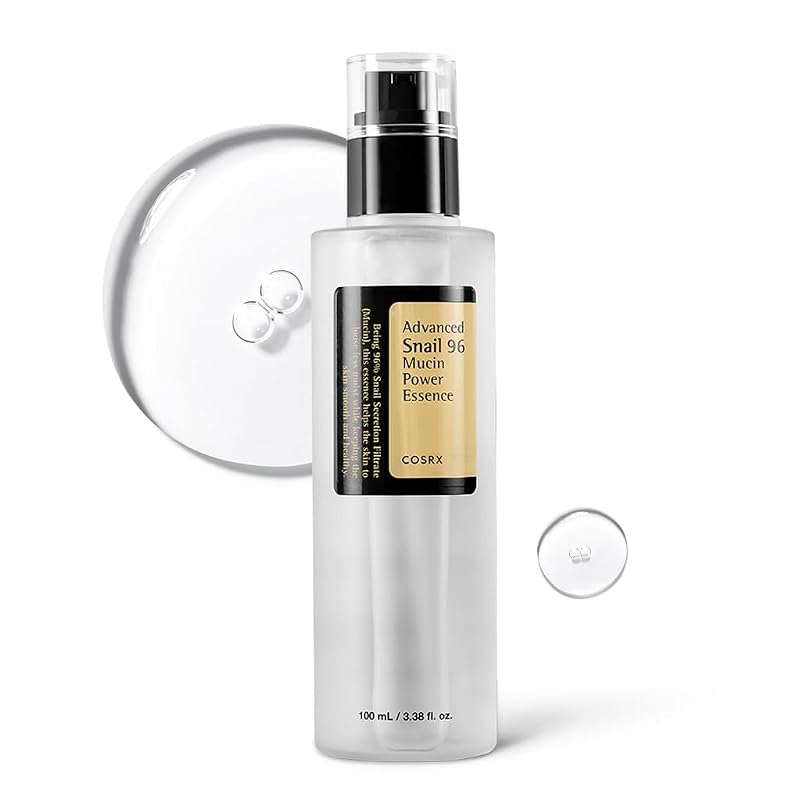
COSRX Advanced Snail 96 Mucin Power Essence
96 % snail secretion filtrate · 100 ml · ~$25 · cult-favorite for 10+ years
K-beauty's signature is hydration done in thin layers, and Western drugstore moisturizers don't compete. US brands sell 'one cream does it all'; K-beauty stages cleanser → toner → essence → serum → cream → SPF, with each layer chosen to do one thing well.
- Snail mucin brings glycoproteins and hyaluronic acid in one layer
- Layered approach lets you fine-tune by skin condition each day
- Sub-$25 routine that competes with prestige-tier Western products
- Texture-mismatch risk, pilling if layers don't agree
- Step count overwhelming for newcomers
- Some products use trace snail mucin and still call it 'snail', read the inci
The strongest case for K-beauty is restraint. Western moisturizer marketing leans on 'do it all' claims (firm + brighten + lift + hydrate); K-beauty assumes you'll use 4–6 products and each does one job. The result is a more controllable routine: if your skin is dehydrated this week, add an essence; if oily, skip it. Snail mucin (the COSRX hero) earned its viral status because it works for sensitive AND oily AND dehydrated skin, which Western actives rarely do across the board.
Paula's Choice Skin Perfecting 2% BHA Liquid Exfoliant
2 % salicylic acid · 118 ml · pH 3.2–3.8 · ~$37

If you have real acne or visible texture, K-beauty's BHA toners aren't enough. Korean regulators cap salicylic at 0.5 % leave-on; Japan caps it lower; the US allows 2 % OTC. The gap is the difference between maintenance and treatment.
- 2 % BHA at proper pH is the strongest OTC acne treatment without prescription
- Oil-soluble, penetrates into pores where K-beauty's water-based AHA toners can't
- Decade of dermatology endorsement and clinical trial backing
- Stings on broken or sensitized skin
- Easy to over-exfoliate if used daily
- Doesn't replace prescription tretinoin for severe inflammatory acne
K-beauty marketing misleads here. 'AHA-BHA-PHA Miracle Toner' sounds like triple-strength but the individual concentrations (each ~0.5–1 %) sit below what dermatology research considers clinically active. A single 2 % salicylic from Paula's Choice or COSRX's US-formulated BHA Liquid (the Korean and US INCIs differ, read the bottle) outperforms three blended K-beauty acids combined. If you have real comedonal or inflammatory acne, skip the K-beauty option; pay the Western price.
Maelove The Glow Maker
15 % L-ascorbic acid · 1 % vitamin E · 0.5 % ferulic acid · HA · 30 ml · ~$30
L-ascorbic acid at 15 % with vitamin E and ferulic stabilizer is the gold standard for vitamin C. Korean ampoules at '20 % vitamin C' are usually ascorbyl glucoside or sodium ascorbyl phosphate, derivatives that skin has to convert to L-ascorbic acid first. The reference formula (15 % L-AA + 1 % E + 0.5 % ferulic) was patented by Duke in the early 2000s and the SkinCeuticals C E Ferulic implementation has 15+ years of dermatology adoption. SkinCeuticals pulled its US Amazon distribution; Maelove ships a near-clone at one-sixth the price.
- L-ascorbic at 15 % is the vitamin C form most studied for photoaging (collagen synthesis, pigmentation, antioxidant defense)
- Stabilized formula closely matches the SkinCeuticals C E Ferulic reference at one-sixth the price
- US adapalene (Differin) is OTC at 0.1 %, prescription-only in Korea and Japan
- $30 isn't $182, but L-AA still oxidizes, yellow → orange → brown means dead; opened bottles last 3–4 months
- Tretinoin causes flaking weeks 2–8; not a 'just add to routine' product
- Some derm-conservative reviewers still prefer SkinCeuticals' clinical data; the actives match, the brand prestige doesn't
Korean dermatology clinics use the same actives Western dermatology does, tretinoin, hydroquinone, L-ascorbic at clinical concentrations. They don't sell them OTC. The K-beauty 'vitamin C ampoule' market is mostly cosmetic-grade derivatives because L-ascorbic is shelf-unstable and consumer-return-prone. If you want hyperpigmentation correction or anti-photoaging, go Western. If you want 'makes skin look a touch brighter,' K-beauty derivatives are fine and cheaper. The Maelove pick here is the value-tier implementation of the SkinCeuticals reference; the actives are functionally identical, the bottle is the same 30 ml as CE Ferulic at about one-sixth the price, and Amazon distribution is stable where SkinCeuticals has been gray-market-only for years.
The numbers.
| Asia (KR / JP) OTC | US OTC | Verdict | |
|---|---|---|---|
| Salicylic acid (BHA) | 0.5 % cap (KR) | 2 % cap | Western |
| Glycolic acid (AHA) | 5–7 % typical | 8–30 % (peel-grade) | Western |
| Retinol | 0.05–0.3 % | 0.5–1 % | Western |
| Adapalene (Differin) | Prescription-only | OTC at 0.1 % | Western (US) |
| L-Ascorbic vitamin C | Rare in OTC (derivatives) | 15 % Maelove / Timeless | Western |
| Hydroquinone | Banned (KR); allowed in cosmetics (JP) | Rx only since 2020 (was OTC at 2 %) | Asian (JP) |
| UVA filters | Tinosorb / Mexoryl approved | Avobenzone, zinc oxide; Tinosorb S added 2026 | Asian |
| Snail mucin | Stable, mature category | Rare | Asian |
| Centella asiatica | Hero ingredient (post-procedure) | Recently arrived | Asian |
| Fermented essences | Mature since 1990s | Boutique only | Asian |
| Ceramide barrier creams | Mature category | CeraVe + few others | Tie |
| Sheet masks | Mass-market | Niche | Asian |
Other strong options.
Differin (Adapalene 0.1 %)
OTC in the US since 2016, prescription-only in Korea and Japan. The single most-evidenced acne medication available without a doctor's note, and ~$20 for a 45 g tube. If you're treating real acne, this beats every K-beauty BHA toner.
Tretinoin (Retin-A / generic)
Prescription in all markets. The most-evidenced anti-aging molecule available. Generic tret is ~$30/tube. Korean derms prescribe it without friction, so neither market holds an edge on this one.
Timeless 20 % Vitamin C + E + Ferulic Acid Serum
Higher-concentration alternative to Maelove at a similar value-tier price. 20 % L-ascorbic instead of 15 % buys you more potency at the cost of more irritation risk (the 5 % gap matters for sensitive skin). Same formulation pattern (L-AA + vitamin E + ferulic stabilizer), no HA, no peptides; ~$25 for 30 ml. The right pick if your skin tolerates a higher acid load and the Maelove 15 % isn't doing visible work after 12 weeks.
The buying guide.
The exception: sunscreen
Asia's filter lists are longer. The FDA cleared Tinosorb S in 2026, but Mexoryl XL and Uvinul A Plus remain off the US list. The catch: Anua, SKIN1004 and Beauty of Joseon sell US formulas through their American stores, so a genuine Asian-filter sunscreen means buying through an importer, and imported sunscreens are where Amazon's counterfeits sit. Anua's Zero-Cast (~$18) is the safe buy from a Korean brand's own store. For the Asian filters, buy from a retailer that sources through the brand and check the tube.
Hydration & barrier: K-beauty's home turf
Snail mucin, fermented essences, centella: none of these have a Western equivalent at this price point. The COSRX, Beauty of Joseon, Anua, Skin1004 lineup is hard to match on US drugstore shelves under $25.
When you need actives: go Western
Tretinoin (prescription), Differin (US OTC), Maelove The Glow Maker (15 % L-ascorbic at one-sixth SkinCeuticals' price), Paula's Choice 2 % BHA. The OTC active concentration cap matters more than brand prestige. K-beauty 'gentle' routes work for prevention; Western actives are required for treatment.
The 'same brand, different formula' trap
Some global brands sell products under the same name in different markets with materially different formulations. A 'salicylic toner' sold in Tokyo may be a tenth the strength of the US version with the same label. Check the inci list at the country of purchase, not the marketing copy.
FAQ.
Asian regulators (Korea's MFDS, Japan's MHLW) cap leave-on actives lower than the FDA's OTC monograph. Brands formulate to the local cap. The same product may be 10× different strength of an active across markets, sold under the same name.
Myth. The regulatory framework is older and more conservative; cultural preference for gentler routines reinforces it. Asian skin types span the same range as Western skin types; Korean dermatologists prescribe the same prescription actives Western ones do, at the same concentrations.
No. Use K-beauty for what it's best at, sunscreen, hydration, barrier care, gentle routine, and use Western for actives. The optimal routine mixes both, ignoring the cultural-prestige narrative on either side.
Prescription-only in both, as it is in most of the world. Korean derms prescribe it without friction (it's standard-of-care for photoaging). Japan more restrictive. Differin (adapalene) is prescription in both Asian markets but OTC in the US since 2016, a US regulatory gift.
Usually ascorbyl glucoside or sodium ascorbyl phosphate, vitamin C derivatives that skin has to convert to L-ascorbic acid first. Cheaper, gentler, less effective. 15 % L-ascorbic with vitamin E + ferulic stabilizer (Maelove The Glow Maker at ~$30, or SkinCeuticals C E Ferulic at $182 if you can find it) remains the gold standard; the few Korean serums using true L-AA at high % cost the same as the Western options.
For sunscreen: Asian markets, decisively.
For hydration: K-beauty, decisively.
For acids and retinoids: Western brands, decisively.
The idea that K-beauty is universally superior grew up in Western import markets. Inside Korea, dermatology clinics use the same actives Western ones do, prescribed at clinical concentrations. The OTC market sells gentler products because regulators mandate it. Match the product to the use case, ignore the cultural narrative, and buy from whichever market makes the stronger product for that job.